The Art of the Chisel: Why Fine Relief Carving Is the Pinnacle of Sri Lankan Woodcraft
Explore the technical and cultural significance of fine relief carving, the most demanding discipline in the island's traditional woodcraft classification.
Relief carving depth is the cornerstone of Sri Lankan master-grade woodcraft. Ranging from shallow surface engraving to deep, multi-layered relief, the technique measures the sculptor's ability to create the illusion of depth and movement within a single block of wood — the fine layered detailing that gives a master-carved statue its signature presence.
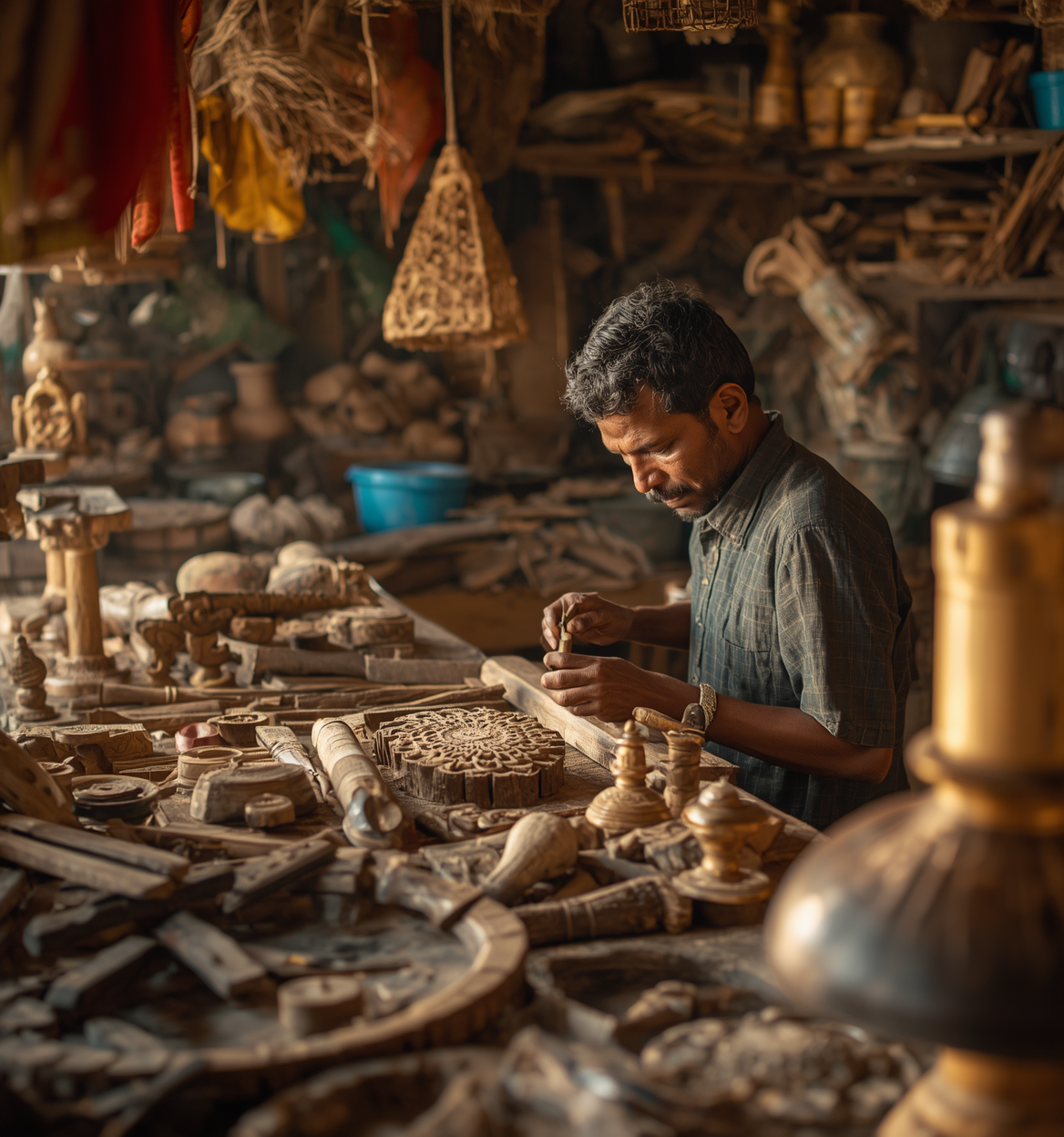
Deep relief work represents the pinnacle of the craft. At this level, the proportion between foreground and background is so precisely balanced that a static wooden panel appears to hold motion. Under close inspection, the carving forms an almost lace-like layering, each plane uniformly smooth and undercut with remarkable evenness.
The technical implications are profound. Fine relief carving in sandalwood and ebony relies on the wood's uniquely tight, even grain — the same density that gives these woods their resonant tone when tapped — which allows a carver to cut hair-fine detail without the wood splintering or cracking. This is why a well-executed relief panel catches light in a way that flatter, shallower carving simply cannot.
Achieving this level of detail consistently requires the rarest hand-eye coordination, the most precise chisel sharpening, and years of apprenticeship. Very few carvers on the island are considered capable of true master-grade relief work.